Have you ever wondered why a quiet neighborhood suddenly gets a four-story apartment building, or why you can’t build a guesthouse in your own backyard?
That’s zoning at work — the set of local rules that determine what can be built, where, and how. While zoning might sound like something only city planners or lawyers need to understand, it actually affects everyone. It shapes our streets, housing, traffic, parks, and even the location of your favorite coffee shop. When communities understand zoning, they’re better equipped to protect what they value and advocate for the changes they want to see.

🗂️ What is Zoning, Anyway?
In simple terms, zoning is how cities organize their land, normally called “Land Use” . It’s like a rulebook that tells you what kind of building can go on a property — whether it’s a house, an apartment building, a store, or a factory.
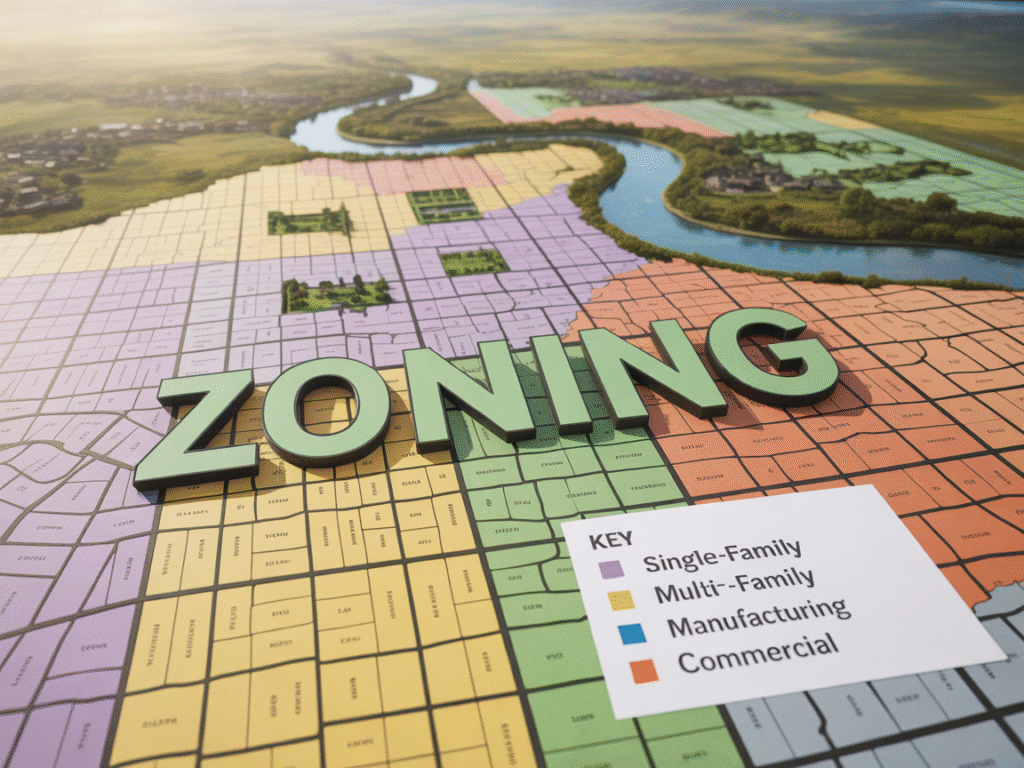
Different Cities divide land into certain zones and referenced by the category followed by a Letter or number, such as:
- Residential – Example (R1, R-1) – for homes, from single-family
- Multi-family- Example (MF-8)
- Commercial – Example (C, C1) – for shops, offices, restaurants
Manufacturing – Example (M-1) Light manufacturing - Industrial (City of Los Angeles) example (M1, M2) – for manufacturing and warehouses
- Mixed-use zones – a blend of residential and commercial (often in downtown or walkable areas)
- Open Space
- Parks
There are also Specific Plans or Overlays which also dictate regulations in certain areas of the city, which we will discuss in another post.
Zoning also regulates things like building height, parking, lot size, how close a building can be to the street (setbacks), and how dense an area can be (FAR: Floor Area Ratio).
So, whether you realize it or not, zoning decisions are already shaping your neighborhood.
🏡 Zoning Shapes the Way We Live
Zoning doesn’t just affect developers — it impacts your daily life.
- Zoning determines how close your home is to a park or a school.
- It decides whether a corner lot can be a market or must stay a house.
- It controls whether apartments are allowed next to single-family homes.
For example: In cities like Covina or West Covina, R-1 zoning means one house per lot, and in some cities, such as Covina, they are zone R-1-7500, which means one house per lot with a minimum lot area of 7,500 square feet.
📊 How Zoning Helps Build Better Communities
When zoning is done well, it becomes a tool for building communities that are:
- Organized: Clear separation between homes and heavy manufacturing or Industry keeps neighborhoods safe and clean.
- Predictable: Homeowners and business owners can rely on what their surroundings will look like.
- Healthy: Good zoning promotes walkability, green space, and access to services.
- Equitable: Modern zoning can ensure affordable housing is included in new developments.
- Sustainable: Encouraging transit-oriented development (building near buses or rail lines) reduces traffic and pollution.
⚠️ What Happens When Zoning Goes Wrong?
Unfortunately, not all zoning is helpful.
1. Exclusionary Zoning
Historically, many zoning codes were written to keep certain people out — especially people of color or lower-income residents — by requiring large lots or banning apartments. This created long-term inequality in housing access.
2. Outdated Codes
Some cities still use zoning rules from decades ago that don’t reflect today’s needs — limiting affordable housing, walkable design, or green infrastructure. Such as the City of Los Angeles, is currently revamping their zoning code to reflect the present and to vision the future.
3. Community Pushback
When people don’t understand zoning, they may oppose good projects — like affordable housing or mixed-use buildings — simply because they fear change.
The more you understand zoning, the more empowered you are to speak up, protect what matters, and influence smart, fair planning in your city.
✅ Conclusion: Zoning is the Framework Behind Every Great Neighborhood
Zoning may seem like a complex government tool, but at its core, it’s about how we shape the places where we live, work, and play. It decides whether your neighborhood has a park, a grocery store within walking distance, or space for new families to move in. It influences how long you sit in traffic, how far your kids walk to school, and whether your aging parents can live nearby in a smaller unit or accessory dwelling.
When zoning works, it quietly supports a well-functioning, balanced community — one that grows thoughtfully, serves all its residents, and reflects shared values. But when misunderstood or misused, it can stall progress, deepen inequality, and create neighborhoods that exclude instead of welcome.
Understanding zoning doesn’t require a law degree or a job in city government. It starts with knowing your own neighborhood’s zoning, asking questions at public meetings, and learning how local land use decisions are made. When more people engage with zoning — not just planners and developers — our communities become more inclusive, responsive, and resilient.
In a time where cities like Los Angeles, Covina, and many others in the San Gabriel Valley are grappling with housing shortages, traffic congestion, and climate pressures, zoning is one of the most powerful tools we have to create stronger, smarter, and fairer communities.
So whether you’re a homeowner, renter, small business owner, or just someone who cares about where you live, learning about zoning isn’t just useful — it’s essential.
Because the better we understand zoning, the better we can shape the future of our cities — together.